When Drug Names Rhyme: A 2026 Pickup Checklist for Sound-Alike Medications
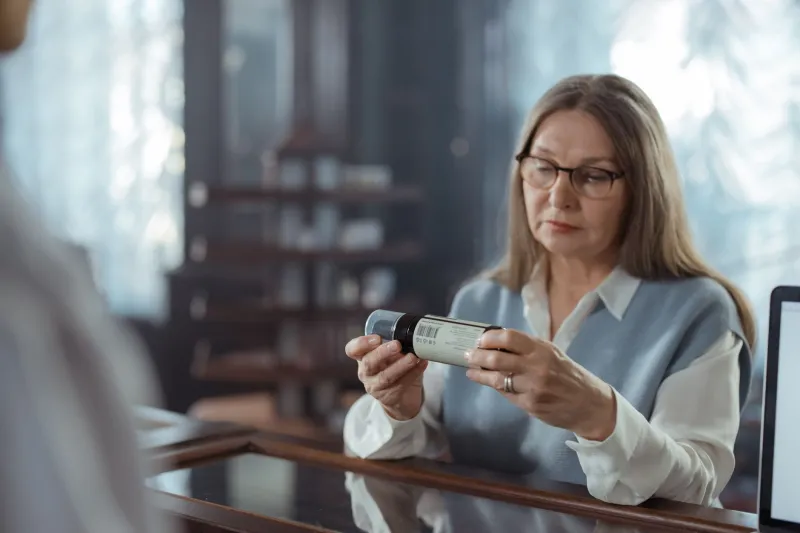
At a busy pharmacy counter, two drug names can sound almost interchangeable. One may be for blood pressure and the other for allergies. One may be a tablet taken once daily and the other an extended-release product taken differently. Sound-alike and look-alike names are a known medication-safety problem, and the risk does not sit with one person or one step. It can begin at prescribing, continue through transcription and dispensing, and end at pickup when a patient accepts a bag without checking the label.
The good news is that a short, repeatable routine can interrupt that chain. The routine does not require memorizing pharmacology. It requires confirming three things before leaving the counter: what the medicine is for, what strength and form it is, and how it should be taken.
Why tall-man lettering exists
Tall-man lettering uses mixed uppercase and lowercase letters to make similar drug names easier to tell apart. The convention highlights the syllables that differ. Examples include buPROPion and busPIRone, glipiZIDE and glyBURIDE, and hydrOXYzine and hydrALAZINE. The visual contrast is intended to slow the eye at the point where names are most likely to be misread.
The practice grew out of medication-error prevention work and is widely used in safety literature, labeling, and some electronic systems. It is an aid, not a guarantee. Not every pharmacy label, prescriber screen, or spoken conversation uses tall-man lettering. When a name is read aloud, the capitalization disappears. That is why the counter check should include the purpose of the medicine, not just the spelling on the label.
Where confusion can happen
At prescribing, a clinician may choose from a dropdown list where similar names sit near each other. A verbal order or a handwritten note can be misread. At transcription, a phone call or fax can introduce another point of confusion. At dispensing, stock bottles with similar names may be stored close together, and high volume can make a quick glance feel sufficient. At pickup, the patient or a family member may hear a name that sounds familiar and assume it is the usual medicine.
The pickup step deserves particular attention because it is the last easy checkpoint. A patient may be picking up for a spouse, a parent, or a child. The name on the bag may be correct for the person, but the drug may not match the expected purpose. A new generic name may sound unfamiliar even when the product is appropriate. A dose may have changed. The counter is the right place to ask, before the first dose is taken at home.
A three-question pickup routine
Ask the pharmacist or technician to confirm the indication. A simple question works: 'What is this medicine for?' If the answer does not match the condition being treated, stop and clarify. This is especially important when several family members have prescriptions at the same pharmacy or when a caregiver is picking up for someone else.
Next, confirm the strength and dosage form. Read the label and compare it with what the prescriber told you. A 10 mg tablet is not a 20 mg tablet. An extended-release product is not the same as an immediate-release product. A liquid concentration can differ from another liquid concentration. If the strength or form is new to you, ask whether the prescriber intended a change.
Finally, confirm the directions. Check how much to take, how often, with or without food if relevant, and how many refills remain. If the directions on the label differ from what you expected, do not rely on memory or on a previous bottle. Ask the pharmacist to explain the label and, if needed, contact the prescriber.
Practical habits that reduce the risk
When picking up a prescription, compare the name on the label with the name you expected. If the name is unfamiliar, ask the pharmacist to say it clearly and to state its purpose. For a new prescription, ask whether it is a new medicine or a replacement for something else. If a caregiver is picking up, have the person's date of birth and the intended purpose available, and call the patient if anything is unclear. In a drive-through lane, open the bag and check the label before leaving the lot.
It also helps to keep a current medication list, including over-the-counter products and supplements. Bring it to appointments and use it when speaking with the pharmacist. A complete list gives the pharmacist context for interactions and duplications, and it makes a name mismatch easier to spot. If a label shows a different manufacturer or a different appearance, do not use appearance alone as proof of identity; the name, strength, and directions are the anchors.
If something seems wrong
Do not take a dose from a package you cannot identify. Keep the packaging and receipt, call the pharmacy, and explain what you expected versus what you received. If the prescriber's instructions and the label do not match, contact the prescriber as well. If a medication error has caused harm or a serious near miss, report it through FDA MedWatch or the pharmacy's patient-safety process. For immediate symptoms, seek medical care.
Drug names will continue to echo one another. Tall-man lettering helps the eye, but the pickup conversation helps the patient. Confirming indication, strength, and directions takes less than a minute and turns a familiar-sounding name into a verified prescription.